135 Timika Young Generations Equipped in Digital Literacy Bible Week 2026
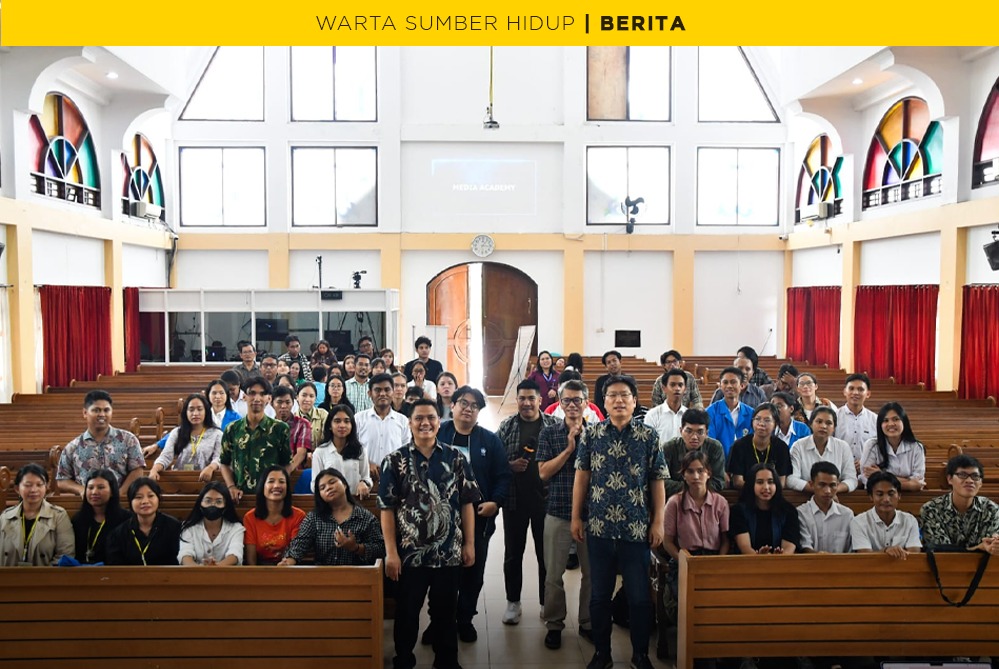
Timika, 1 April 2026. The atmosphere that morning was different. In the midst of a Timika sky that began to clear after the rain, hundreds of children, teenagers and youth gathered with one goal: learning, not just about technology, but about how to remain a light in the midst of an increasingly complex digital world.
A total of 135 participants participated in Digital Literacy activities in a series of Bible Week organised by the Indonesian Bible Institute (LAI), Wednesday (1/4). This activity is not just a seminar, but a space for faith provision in the midst of the swift flow of technology and artificial intelligence (AI).
The event opened with a collective prayer, a simple reminder that in the midst of a digitalised world, wisdom still comes from God. Participants who came from various churches, ranging from GIDI to other church youth communities, were invited to take home provisions that were not only relevant, but also impactful for their ministries.
Knowing the Digital World: Between Opportunity and Deceit
In the opening session, Agnes Sintyke Sirait began in an unusual way with a story that invited laughter and reflection.
She recounted a personal experience of "fear" in a hotel that turned out to be just a result of perceptions built from narratives, viewpoints, and pieces of information. By the end of the story, the audience realised: what seems convincing may not necessarily be true.
“Welcome to the world of deceit,” he said, to the reaction of participants who began to understand the direction of the conversation.
That's where Agnes asserts that the digital world is a fabricated space, where stories can be shaped, emotions can be directed, and the truth can be twisted.
“Even something that looks objective can have its narrative altered,” she explained.
He also highlighted how AI technology is now able to change a person's face, body shape, and visual identity in just seconds. But despite its sophistication, there's one thing that AI doesn't have:
“Conscience and reason. Those are only possessed by humans.
She then introduced the four pillars of digital literacy summarised in a simple term: C-A-B-E:
Cakap: able to use technology wisely and critically
Aman: safeguarding personal data and understanding digital risks
Culture: interact politely and respect others
Ethics: responsible for any content created and shared
Through real-life examples ranging from hoaxes, digital fraud, to AI-based visual manipulation, participants were invited to be more critical and vigilant. Agnes emphasised that in the midst of technological sophistication, humans must still be subjects of wisdom and discernment.
From Consumer to Creator
More than just understanding digital risks, participants were also encouraged to transform from viewers to creators. Agnes emphasised that everyone, regardless of the number of followers, has a role to play in delivering constructive content.
“God is the Creator. We are created in His image, meaning we also have the creative DNA to create,” she said.
Behind the screens of mobile phones, there are many people who are: feeling lonely, losing hope, even at the point of despair.
“We never know, one content we create could be the answer to someone's prayer,” she said quietly.
She asserts that spiritual content is not just “posting verses”, but can be a bridge to those who no longer open the Bible.
“If they don't come to the Word, it may be our content to bring the Word to them.”
Media Is A Tool, Creativity Is A Call
In the next session, Zegy Patianom took participants through the practical side of the digital world. With a light-hearted style, he reminded the audience that media is just a tool, from cave paintings to the smartphones in our hands today. But the important question is: what do we want to use it for?
“Don't be a slave to social media. Be a creator," she said.
She relates this to the concept of "Imago Dei" that humans are created in the image of God the Creator. This means that creativity is not just an ability, but a vocation of faith.
In practice, participants learnt that making videos does not have to be with expensive equipment. In fact, with rubber bands, paper, or your own hands as a tripod, content can still be creatively created.
“If you don't have sophisticated tools, don't worry. We have brains to think and create,” she added.
From Tentena to Asmat: Content that Moves the Heart.
To enrich their understanding, participants were invited to watch real works that LAI has produced, ranging from a mini-documentary about ministry in Tentena to documentation of Bible distribution in Asmat. Stories of travelling hundreds of kilometres to collect donations, to testimonies of congregations longing to own a Bible, served as a reminder that content has the power to touch and move hearts. Through this example, participants understood that good content is not only visually appealing, but also contains a strong and meaningful message.
Living the Word in the Digital Age
This activity did not stop at theory. Participants were invited to get creative through a challenge “One Verse One Minute” which was to make a short video based on one Bible verse.
In this way, the younger generation is encouraged to start taking an active role as creators of relevant and contextualised spiritual content.
“If the digital world is full of darkness, then the light must come from us,” became the message that strengthened the entire series of activities and became a united movement. Through the collaboration between faith and technology, this Digital Literacy activity becomes more than just a training, but a movement that invites the younger generation to: think critically, act wisely, and work creatively so that the digital world is not only a place of consumption, but also a space to present God's truth, hope, and love.
[Agnesssirait]