” His Welfare is Your Welfare”
Welcoming National Awakening 2024
There was a village man named Mas Ngabehi Wahidin Sudirohusodo. Wahidin was from Mlati, four kilometers north of Yogyakarta. He was the first bumiputera child to be admitted to an elementary school for European children (Europesche Lagere School, ELS). After graduating from ELS, he continued his studies at the Bumiputera Medical School (Dokter Jawa). Because he was a clever boy, after graduating in 1872 Wahidin was appointed as a teaching assistant at the school. A few years later he returned to Yogyakarta and became the region's health official until 1899.
Wahidin was known as a humble and refined person. He was able to combine the Western education he received with the best elements of Javanese culture. Apart from being widely known as a doctor, Wahidin was also an accomplished karawitan (Javanese gamelan art) player, as well as a puppeteer of wayang kulit.
He had noble ideals, reviving the glory of the “ Javanese nation ”, which at that time was oppressed by the Dutch. According to Wahidin, Javanese progress can only be achieved through western science through education, but without forgetting its Javanese cultural heritage. Wahidin believed that modern education strengthened by deepening the culture of the ancestors would help people overcome the problems of daily life. Wahidin's ideals were expressed through the newspaper he led since 1901, Retno Doemilah. Through the Malay and Javanese language newspaper, which was published three times a week, Wahidin explained the decline of the native society and the importance of education to improve the welfare of the native population. He invited the nobles and government officials to unite and support the education improvement program. It seemed that his calls and pen strokes were not well received.
After a long time without success, one day Wahidin was invited by two students of STOVIA (Medical School) Jakarta, Soetomo and Soeradji, to share his ideas and ideals in front of the STOVIA students. They were moved by the doctor's enthusiasm. Soetomo wrote of his meeting with Wahidin, thus:
“I met Dr. Wahidin Soedirohoesodo with a calm but sharp face, and his skill in expressing his thoughts made a great impression on me. His clear, calm voice opened my mind and heart, bringing new ideas and opening up a new world that encompassed my hurt and pain. Talking to Dr. Wahidin was a moving experience, one could easily tell the noble spirit of this doctor's dedication.” (R. Soetomo,”Memories of 1933” as cited by Manuel Kaisiepo, 2000).
The ideas and ideals that Wahidin had long fought for, found their realization when the STOVIA students agreed to form an organization according to Wahidin's wishes. The students of the doctor's school even wanted the organization not only to take care of education, but also to make the bumiputera population aware that they were not inferior to Europeans, Chinese and Arabs.
Then, on May 20, 1908, at 9 a.m., several students gathered in the anatomy course room. Soetomo chaired the meeting that morning. In front of him were a number of young aspiring doctors: Goenawan Mangoenkoesoemo, Soeradji, Soewarno, and several others. Soetomo explained again Wahidin's ideals and the importance of the organization to advance education and culture in the Dutch East Indies. That morning Budi Oetomo was established. The group of students probably never thought that their small meeting that day would start the Indonesian independence movement. Boedi Oetomo was the first modern organization in the archipelago. Decades later, Mohammad Hatta, referred to the founding of Boedi Oetomo as "the sprout of the national spirit". A month later, in June 1908, the establishment of Boedi Oetomo was announced in the Bataviaasch Nieuwsblad newspaper. Signed by the organization's secretary, Soewarno, the edict read, among other things, "Boedi Oetomo stands to improve the condition of our people, especially the small people." One important statement in the circular letter was that it explicitly stated Boedi Oetomo's goal, "progress for the Indies". If Wahidin started from a concern for the fate of the ”Javanese nation”, the young men of Boedi Oetomo broadened its scope to the entire Dutch East Indies (at that time the name Indonesia was not yet known).
Being a doctor, for Wahidin Soedirohoesodo as well as for Soetomo and friends, was at that time a comfortable position with a bright future. Not only did they want to be rich, they also cared about the fate and welfare of the bumiputera. They realized that their hopes and aspirations would face pressure from the colonial government. As well as resistance from their own people, who did not want to lose their stability and comfort.
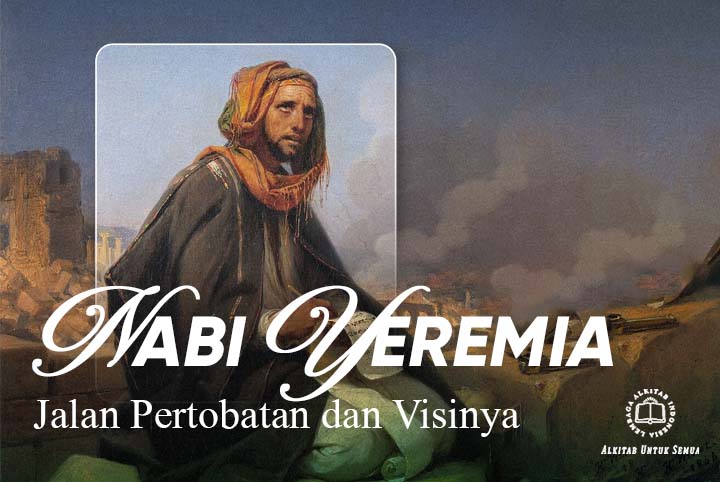
About 400 years before Christ, the prophet Jeremiah told the Israelites in exile, "Seek the welfare of the city to which I have sent you, and pray to the Lord for it; for its welfare is your welfare" (Jeremiah 29:7). In the situation of living as an exile, Jeremiah advised the people not to think of returning to Jerusalem anytime soon. He prophesied that the exile would last 70 years. God would still bless the people with peace and prosperity even though they were living overseas. All they have to do is pray for and seek the welfare of the city where God has placed them. Rev. Yongki Karman in his book "Word and Work" writes that the people are called to actively participate in building the city because their welfare will depend on the welfare of the city. The people of Israel who were scattered in Babylon, even though they were a minority, should not just hitchhike, but should also strive for the welfare of the city where they lived.
According to Yongki, one of the defects of the ummah is that it does not care what the nation itself will become and only cares about the affairs of the people, as if the people are a part that can be separated from the nation. As Christians in Indonesia, we should have a strong sense of Indonesia as our homeland, our common blood. Not only that, Indonesianness must be inherent in the identity of the ummah. We are not Christians who happen to be born in Indonesia, with Indonesianness as an additional predicate, only Indonesian citizenship, while their dreams and work are in another country. We are Indonesians who happen to be Christians, with Indonesianness as an identity inseparable from our national identity. The disgrace of the nation is our disgrace, the honor of the nation is our honor. Like Jeremiah's message, we have the responsibility to do what is good for the nation. Serving the interests of the nation is our constitutional obligation.
Exemplifying Wahidin and Soetomo, who cared and empathized with the fate of their nation, we are also called to do so. Together with various elements of the nation that are pluralistic and come from diverse backgrounds, we are invited to fight together to overcome various national problems, such as: poverty, injustice, division, radicalism, ethical issues, and technological advances due to the digital revolution that affect many aspects of life. The story of Budi Oetomo is 116 years old, but the struggle is not over. Wahidin and Soetomo's dream is still with us, to realize a prosperous Hindia (Indonesian) society that stands as an equal among other great nations. It is our duty to continue their vision. Because Indonesia's prosperity is our prosperity. Happy National Awakening!