Maria is one of the most important female figures in the Christian tradition. Her name is not only recognised as the mother of Jesus Christ, but also as a figure of faith who has had a profound influence on the spirituality of the church throughout history. In various ecclesiastical traditions, Mary is often understood as a symbol of divine motherhood, a symbol of chastity, and a model of the ideal disciple. However, a reading of Mary cannot stop at sentimental images of tenderness and submission alone. The Gospels, especially Luke, present Mary as active, reflective, and even revolutionary in her engagement with God's work of salvation.
The important question then arises: why did God choose Mary? Who was Mary that she was chosen to bear the Messiah? Why did she accept the call, when pregnancy before legal marriage in Jewish culture was a social disgrace that could destroy family honour? These questions open up a space for deeper reflection on Mary's identity, her social context, and the theological meaning of her vocation.
Mary in Christian Tradition and Cultural Representation
Throughout the history of Christianity, Mary has often been portrayed as the feminine face of God's love. She is seen as a gentle, loving, motherly figure who faithfully accompanied Jesus from the beginning to the end of his ministry. Because of her faithfulness, Mary is also often referred to as the ideal disciple of the church. She was present at the key events of Jesus' life: from the proclamation of his birth, to the first miracle at Cana, to the crucifixion on Golgotha.
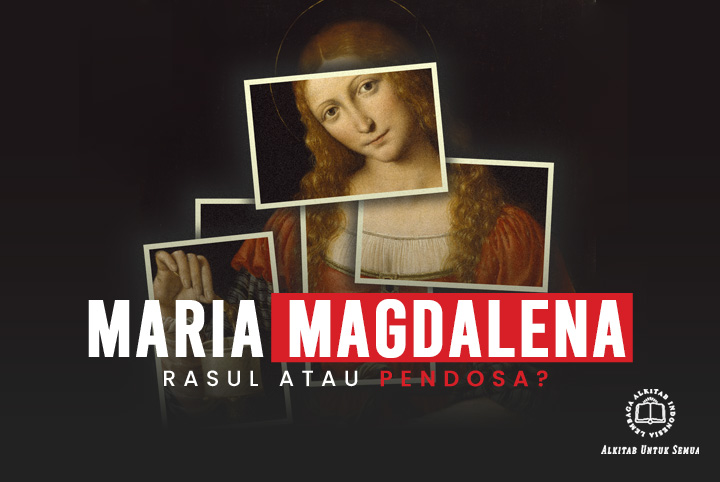
In the Christian art tradition, especially since the Renaissance, Mary is often depicted with symbols of purity, such as white lilies symbolising virginity. Paintings such as The Annunciation from the Rothschild Prayer Book or the works of Nicolas Falco depict Mary as a woman who is submissive, modest, and full of resignation to God's will. The influence of Renaissance humanism even presents Mary as a woman with access to education and literacy, although the domestic element is still emphasised through symbols of the household.
These representations shape the popular understanding of Mary as a meek and passive figure. However, a deeper reading of the Gospel texts reveals a much more complex dimension of Mary. Mary is not only a symbol of chastity, but also a symbol of courage, solidarity, and resistance to oppressive social structures.
Mary's Depiction in the Four Gospels
The four Gospels present Mary with different emphases. In Mark, Mary appears in the context of the rejection of Jesus in Nazareth. There Jesus is referred to as the "son of Mary," an unusual title in Jewish patriarchal culture. In Matthew, Mary appears in the birth narrative of Jesus, but after that the figure of Joseph is dominant in directing the family to Egypt.
In contrast, Luke's Gospel gives Mary a great deal of attention. Luke places Mary at the centre of the nativity narrative. She is depicted struggling with the angel Gabriel's message, visiting Elizabeth, singing the Magnificat, and pondering the things of her heart. In fact, Luke is the only Gospel that gives readers access to Mary's inner thoughts and reflections.
In John's Gospel, Mary's appearance is brief, but significant. She is present at the beginning of Jesus' ministry in Cana and present at the end of his ministry at the foot of the cross. Because of this consistent faithfulness, Mary is often understood as the first disciple to faithfully follow Christ to the end.
Luke's Gospel Context and Theme of Hope
Scholars estimate that Luke's Gospel was written around 70 & 85 AD, possibly in Palestine, Rome, or Southern Greece. This period was characterised by great political and social upheaval, including the destruction of Jerusalem in 70 AD, Roman military expansion, and various socio-economic crises in the empire.
In this context, Luke wrote his gospel as a message of joy for a community living in uncertainty and suffering. Jesus' birth narrative is shaped by Old Testament patterns, particularly the prophetic patterns of the births of important figures such as Isaac (Genesis 18:10), Samson (Judges 13:3), and Immanuel (Isaiah 7:14) as well as the vocation patterns of God-sent figures such as Moses, Gideon, Isaiah, and Jeremiah.
Thus, the story of Mary and Jesus is not simply a domestic story of a mother and child, but rather part of God's salvation history that brings new hope to a world in turmoil.
Mary and Social Risk in a Patriarchal Culture
One important aspect of Mary's story is the context of Jewish patriarchal culture. In first century Jewish society, a woman's virginity was strongly associated with family honour. Honour was not only considered important, but was the basis of a family's social existence. In the context of ancient Israel, honour was not just “everything”, but was seen as the only thing that determined the dignity of the family. A woman who was proven to be a virgin was subject to severe punishment as stated in Deuteronomy 22:13-21. Therefore, when Mary received the news that she would conceive before officially becoming Joseph's wife, she was actually in a very dangerous situation socially. A pregnancy outside of marriage not only shamed her, but also her father, brother, and the rest of her family.
This is where Mary's courage becomes apparent. Her answer to the angel is not just a passive act of resignation, but a risky decision of faith. Mary was willing to leave social security in order to carry out God's will. In this, Mary follows the pattern of Old Testament figures like Abram who were called to leave social ties in order to carry out God's mission.
God's choice of Mary also demonstrates the character of God's work of salvation which often works through those who are small, weak, and unaccounted for. God chose a young woman from Nazareth, a small, unrecognised village, to be an important part of the world's salvation history.
Magnificat as a Song of Liberation
The Magnificat (Luke 1:46-55) is not simply a gentle, soothing spiritual hymn, but rather a prophetic declaration of God's social reversal.
German theologian Dietrich Bonhoeffer called the Magnificat the most revolutionary Advent hymn ever sung. In this hymn, Mary speaks of a God who humbles the proud, knocks rulers off their thrones, exalts the lowly, and satisfies the hungry with goodness.
The Magnificat shows that Mary is not the passive, dreamy figure often depicted in religious art. Rather, she is a woman who is aware of the realities of social injustice and believes that God is at work reversing the oppressive world order.
Mary's song also stands in the continuity of the tradition of Old Testament women like Miriam, Deborah, and Hannah. Like them, Mary sings of God's saving work for the oppressed. As such, Mary does not appear as an individual figure separate from her community, but rather as part of a long solidarity of women of faith who take part in God's saving history.
The Theological Meaning of the Word ταπείνωσιν (Tapeinosin)
In the Magnificat, Mary refers to herself as "lowly" or "lowly." The Greek word used is "alpha" and "ppi" and "epsilon" (tapeinosin). This word does not simply refer to spiritual humility, but also describes a state of suffering, oppression, misery, and social vulnerability. Thus, Mary was speaking from real experience as a poor woman living in the socio-political oppression of her time.
This understanding is important because Mary is often reduced to a symbol of gentle and submissive spirituality. In fact, Luke's Gospel presents Mary as a woman who experienced structural oppression, but still had the courage to hope and engage in God's liberating work.
Mary as a Model of Faith Solidarity and Resistance
Maria became a model of faith not because she was socially perfect, but because of her courage to answer God's call in the midst of risk and uncertainty. She showed that true faith does not stop at personal piety, but moves towards social solidarity.
The Magnificat shifts the focus from Mary's personal experience to the suffering of all humanity. From the private sphere, the song moves into the public sphere. Mary speaks of a God who is faithful to his covenant with Abraham and who continues to work in defence of the oppressed.
In the context of a modern world still characterised by economic inequality, violence, exploitation and structural oppression, Mary's song remains relevant. Global capitalism, social injustice, and various forms of marginalisation make the Magnificat a prophetic voice that continues to call the church to side with the weak.
Pope John Paul II once stated that Mary is a model for those who do not passively accept the adverse circumstances of personal and social life and are not victims of alienation, as they say today, but who, with her, proclaim that God 'raises the low' and, if necessary, overthrows the powerful from their thrones. This statement confirms that Mary was not a symbol of passivity, but rather a symbol of the courage of faith active against injustice.
Closing
Maria, the mother of Jesus, is a figure rich in meaning. She is not only the woman chosen to give birth to the Messiah, but also a symbol of hope, courage, and solidarity in God's work of salvation. Luke's Gospel presents Mary as a woman who struggles with her social reality, but is still willing to say "yes" to God's call.
Through the Magnificat, Mary becomes a voice for the oppressed and excluded. Her song contains a vision of a new world in which God overturns oppressive structures and brings justice to the lowly. As such, the Magnificat is not just a beautiful liturgical song, but rather a prophetic call for the church to engage in real social transformation.
In this light, Mary is not simply an object of religious devotion, but an active, critical, and courageous model of faith. She teaches that God's call often comes through human vulnerability, and that God's work of salvation is always moving towards liberation, justice, and the restoration of human dignity.