Source: Lady Mandalika
Editor: Vince Ellysabeth
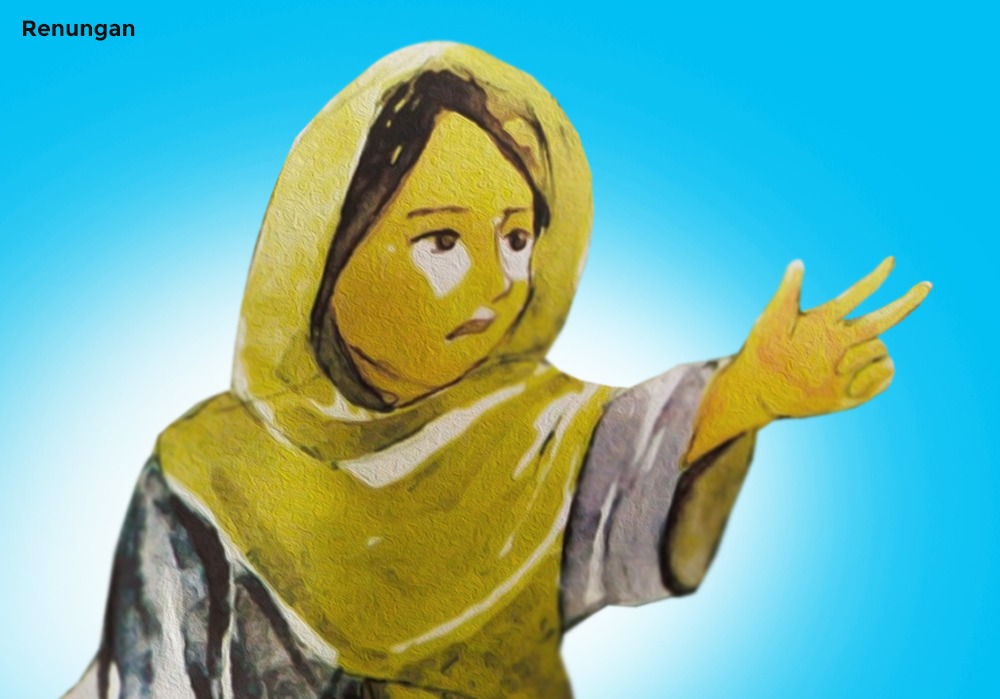
David was a king. He had the power to make decisions, impose punishments, and even determine a person’s fate. However, in the midst of a family crisis, that very power prevented him from seeing a way out. Before him lay only two choices: either Absalom would be punished or he would remain in Geshur. It was amidst the king’s impasse that an unnamed woman from Tekoa appeared. She did not come with an army or political clout. She came bearing words, parables and the courage to suggest another possibility. This story is a fascinating illustration of how an alternative vision can emerge even from those who are not at the centre of power.
Celebrating independence should therefore not be limited to annual ceremonies. The commemoration of the 81st anniversary of the Republic of Indonesia can serve as an opportunity to revisit the vision of the struggle for independence and compare it with the realities facing the nation today. In the context of the struggle for independence, limitations did not stifle the vitality of the people’s movement. Various fundamental issues were raised, resistance was sustained, and alternative visions were championed. The question, then, is not merely whether this nation has formally achieved independence, but whether the vision of independence for which the struggle was waged has truly been realised. Furthermore, do we still have the space to fight for other possibilities when the current reality does not yet reflect justice?
When a King Sees Only Two Choices
The Bible shows that the dynamics of liberation and freedom are never simple. In 2 Samuel 14, the story of the wise woman of Tekoa emerges against the backdrop of a royal family conflict. Amnon had raped Tamar and was subsequently killed by Absalom, Tamar’s brother. Because of this murder, Absalom fled to Geshur and remained there. David was initially angry because Amnon was his son, but once his anger had subsided, he actually longed for Absalom. It was here that David’s dilemma became all the more acute: as a father, he longed for his son, but as a king, he had to face the legal consequences of Absalom’s actions.
Interestingly, David seemed caught between two choices: Absalom must either be punished or remain in exile. He had not yet considered a third possibility. It was precisely at this point that the woman from Tekoa appeared. Joab was aware of David’s longing for Absalom and asked the woman to go before the king. Her presence was significant not because she held any power, but because she was able to see what David could not. She came to open up space for an alternative vision amidst a situation that seemed to offer only the choice between punishment and exile.
The Woman Who Turned Marginalisation into Strength
The way the woman of Tekoa spoke to David demonstrated strategic intelligence. She did not immediately raise the issue of Absalom. Instead, she first introduced herself as a widow. Within the legal context of the Ancient Middle East, widows and orphans belonged to marginalised groups who were entitled to protection and justice from the rulers. Therefore, her identity was not merely a description of her social circumstances. It served as a gateway to gain access to the king. This woman demonstrated that being in a marginalised position does not necessarily mean a loss of power. Rather, she read the existing structure and utilised the available space to make her voice heard.
According to Joseph Dylan’s research, the strategies employed by the women of Tekoa are also linked to the patterns of petitioning found in Ancient Middle Eastern law. Cases were not always presented directly; proverbs or parables could be used to raise an issue. The woman from Tekoa employed this method. The story of two brothers who quarrelled, where one killed the other and was subsequently threatened with death by the community, was not an actual case she was facing. The parable served as a mirror that was gradually directed towards David himself.
David then ruled that the woman need not fear and that her son must be protected. Upon receiving this ruling, the woman from Tekoa turned the ruling back upon the king: if David was willing to protect the child in the parable, why did he not do the same for his own son, who was in exile in Geshur? It was then that David realised that the petition was, in fact, about himself. The question was no longer merely-simply about a father longing for his child, but about a leader who must make a choice. Would he pave the way for reconciliation and life, or allow violence to determine the future?
Opening Up Possibilities Amidst a Cycle of Violence
The woman from Tekoa does not present a theory of non-violence. However, through her petition, she opens up the possibility of breaking free from a pattern that has so far seemed inevitable. If Absalom were killed in retaliation for Amnon’s murder, violence would once again breed violence. Previously, Absalom himself had killed Amnon after Tamar had been sexually assaulted. This narrative illustrates how violence can be perpetuated from one act to the next. Therefore, the issue is not merely how to punish someone, but whether there is the courage to envisage a path that does not simply repeat past wounds.
Therefore, the question posed by the woman of Tekoa is not merely a matter for the royal family. It became an ethical and political question for a leader: what should be done when society is in a situation rife with violence? How should a leader respond to voices of objection, voices of injustice, and the voices of those asking to be heard? The woman of Tekoa did not usurp David’s authority. Instead, she used her words to make David reconsider the decision he had to make. Here, an alternative vision does not mean having all the answers, but rather the courage to open up possibilities that were previously unseen.
When Wisdom Confronts Power
The narrator deliberately refers to this figure as the “wise woman of Tekoa”. She is not given a personal name. What is emphasised, rather, is her wisdom and her place of origin. A number of commentators suggest that this woman may have been known for her powers of persuasion and her wisdom. For this reason, Joab did not choose just anyone to carry out this task. He sought someone capable of speaking persuasively and convincingly. This detail is significant: the narrative does not introduce the woman by name, lineage or title, but through her quality of wisdom.
The woman of Tekoa’s wisdom is all the more striking when contrasted with David’s helplessness. In the narrative concerning Tamar, David appears as both a father and a leader who is unable to act. The complexity of his family’s problems left him trapped in a dilemma: Tamar was his daughter, Amnon was also his son, and Absalom, who committed murder, was likewise his son. Amidst the king’s impasse, it was actually an unnamed woman who was able to read the situation and voice a different possibility. This contrast reveals an important paradox: power does not always result in the ability to see a way out, whilst someone on the margins may well possess the capacity to open up new possibilities.
In this sense, independence has a deeper dimension. Freedom is not merely freedom from oppressive power, but also the courage to speak, think and act beyond the choices dictated by circumstances. The woman of Tekoa took a risk when she spoke to David. She sought to influence a ruler to hear a different voice, see a different vision and do something different. In repressive situations, the courage to present an alternative vision becomes a tangible form of freedom. However, such courage always carries risks. When one faces authority, fear and past experiences can lead people to choose silence. It is precisely for this reason that the courage of the woman from Tekoa is so significant.
Alternative Visions and the Ethics of Voicing Criticism
However, this story also serves as a reminder that fighting for an alternative vision does not mean justifying all forms of resistance. The woman of Tekoa demonstrates the importance of strategy, wisdom and effective communication when confronting those in power. She is critical, but does not resort to violence. She voices her objections through persuasion, which leads a leader to view their own issues from a different perspective. Her strategy demonstrates that courage and wisdom need not be at odds: a firm voice can be conveyed in a way that is not destructive.
This lesson is relevant to our shared lives today. Many people are striving to voice alternative visions and offer solutions to the nation’s problems. However, the manner in which these aspirations are conveyed also requires careful consideration. Uncontrolled anger can hurt others and even undermine the very purpose of the struggle itself. In a society with a long history of conflict, the courage to speak out must go hand in hand with wisdom in choosing the right approach. Criticism need not lose its firmness simply because it is expressed peacefully; conversely, peace must not be used as an excuse to silence criticism. The women of Tekoa demonstrate one such path: voicing objections, reading the situation carefully, and confronting those in power through words that open up space for change.
Freedom to Imagine Other Possibilities
The story of the wise woman of Tekoa ultimately does not offer a wholly ideal ending. Absalom continued to commit acts of violence. This means that the woman’s actions did not immediately eradicate the root of the problem. However, the imperfect outcome does not render her courage in vain. She had done something important: she opened up a space for possibilities that had previously gone unnoticed by a king. It is here that the theological value of this story can be found. Liberation does not always begin with major changes; sometimes it begins with the courage to say that things do not have to go on as they usually do.
In the context of Indonesian independence, this story invites us to ask ourselves once more: what is freedom used for? Do we still have the courage to speak out against injustice, to nurture our critical thinking, and to fight for a fairer society?
This article is adapted from Bincang Alkitab. Watch the full video version on LAI’s YouTube channel: https://youtu.be/BX-TfsK0B2M?si=PZDWsiZKuYHQH5ic