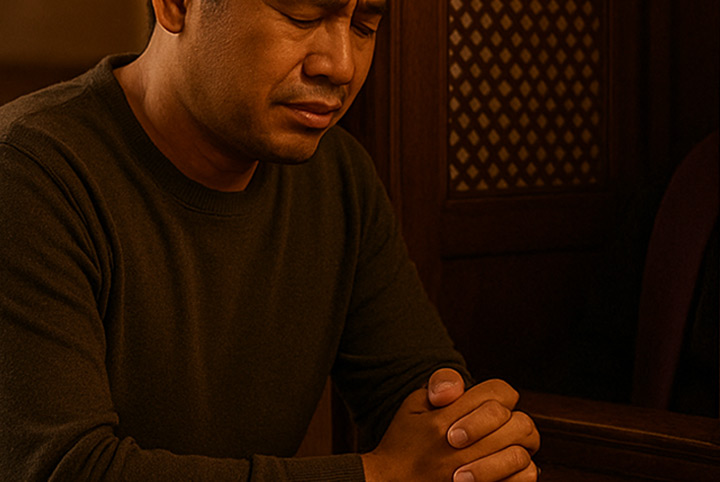
There is no wound more painful than slander. When kindness is met with hatred and sincerity is perceived as evil, the human spirit is easily shaken. That's what the psalmist experienced. In Psalm 109, he poured out his heart honestly. He was angry, disappointed, and hurt. But remarkably, he brought all these emotions before God. He didn't pretend to be stoic; he admitted that his heart was "deeply wounded" (verse 22). What the psalmist does is a validation of emotions, an acknowledgment that anger, sadness and a sense of injustice are natural human responses. Suppressing these emotions can lead to stress and depression. By bringing these wounds to prayer, David was actually undertaking a deep inner healing process.
David also demonstrated healthy coping mechanisms in the face of pressure. He felt poor, weak, and helpless, but he did not give in to despair. He sought help from a source he fully trusted, namely the Lord Himself. "Help me, O LORD my God, save me according to Your steadfast love" (verse 26). In modern psychology, this could be called emotion-focused coping: seeking spiritual support and restoring a sense of control through intimacy with a loving authority figure. His call also reflects the practice of letting go or radical acceptance, letting go of the need to control outcomes and entrusting resolution to a greater power. In this sense, David's prayer is not an escape, but a form of spiritual courage: recognizing one's limitations and trusting in God's justice.
The harsh parts of the psalmist's prayer such as, "He loved the curse, so the curse came upon him" (verse 17), often make modern readers awkward. However, this is not a call for personal revenge, but rather an expression of the human need for justice and equanimity. When someone is slandered or betrayed, the basic belief that the world is supposed to be fair is shaken. Through this honest prayer, David sought to restore his faith that the truth would not be allowed to crumble. The belief that God will act becomes a source of comfort that soothes, lowers anxiety, and restores a sense of security in the midst of uncertainty.
However, this psalm does not stop at anger. At the end, we see the psalmist's inner resurrection. "I will thank the LORD with my mouth; I will praise him in the midst of the people" (verse 30). Here, David displays post-traumatic resilience and growth. He did not drown in bitterness, but rather rose up and found new meaning in his suffering. The pain that was once paralyzing is now a source of gratitude. Thus, he not only recovered, but also grew stronger, more empathetic, and more aware of God's presence in suffering.
Friends of the Bible, Psalm 109 teaches that facing slander does not mean suppressing emotions or retaliating with hatred. Instead, we are invited to be honest with our hurt, pour it out to God, leave vengeance to Him, and restore equanimity through sincere prayer. In every tear and heart cry, God stands by our side. It is from there that true relief is born, not from the disappearance of wounds, but from the confidence that God remains on the side of those who are persecuted and whose hearts are broken.