Bible Talk | Hortensius F. Mandaru, SSL
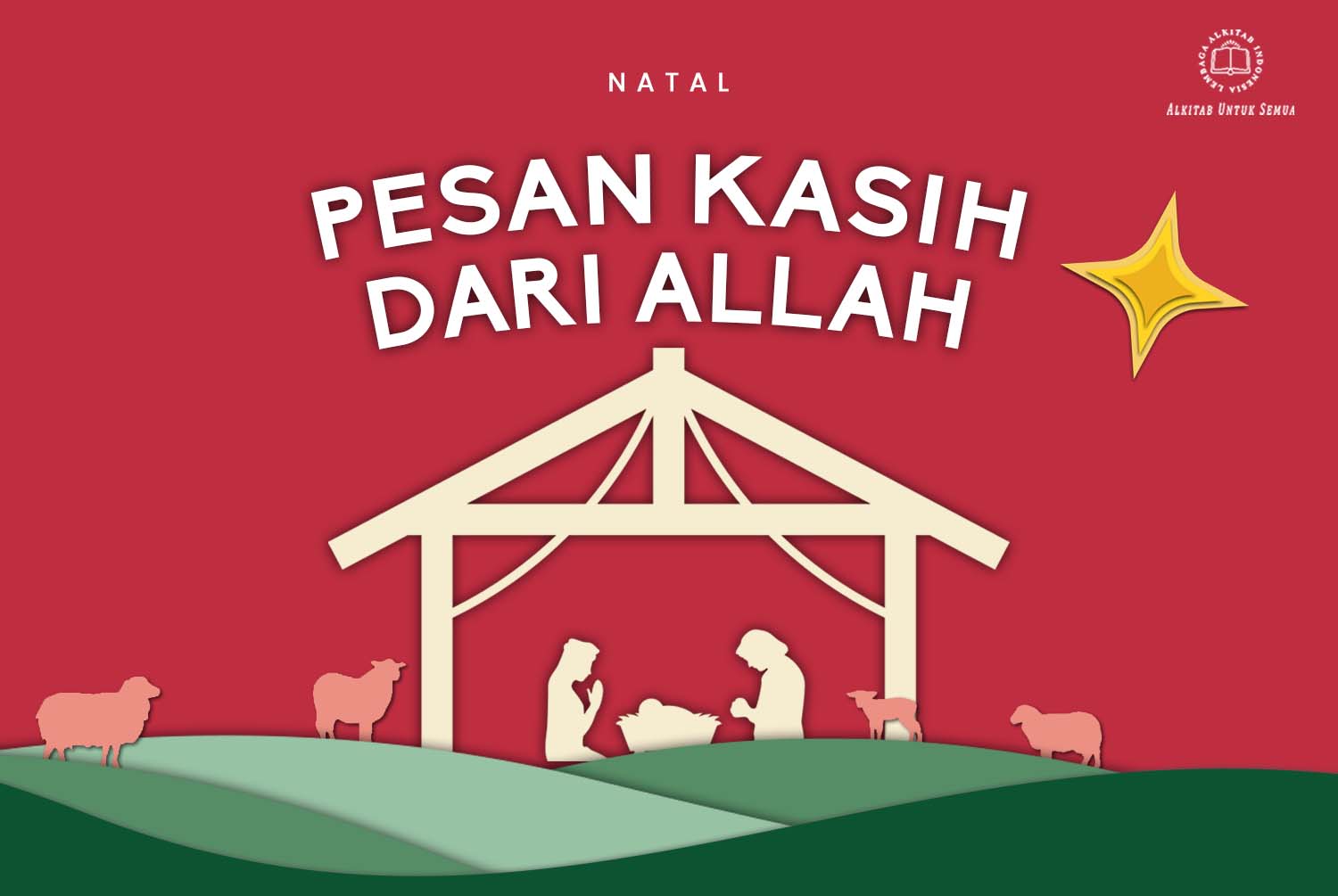
Christmas celebrations today are often associated with long holidays, gift exchanges, meals, ecclesiastical celebrations, and festive parties. Christmas has become a global, even interfaith holiday, with cultural and liturgical trappings that position it as a "public feast". In such a broad and festive celebration, there is a risk that the most concrete dimension of Christmas is marginalised, namely Christmas as a family event. An event of God's incarnation that takes place in the narrow and fragile space of a first century Jewish family, the family of Joseph and Mary.
Family as a Concrete Space
The doctrine of the incarnation, God becoming man, is often understood as a grand and abstract theological concept. Yet the Gospels clearly show that Jesus' humanity did not begin in a space of ideas, but rather in a concrete family: there was a father, a mother, a baby, and a specific socio-cultural context. God takes the beginning of his humanity not through religious or institutional structures, but through domestic relations. As such, Jesus' identity as God-become-man is shaped and mediated by real family relationships, with all their dynamics and struggles.
First Century Jewish Families: Oikia, Sygeneia, and Patris
Understanding the first century Jewish family is key to reading the Christmas narrative more contextually. Mark 6:4 records Jesus' words about a prophet who was not honoured "in his hometown, among his kindred and in his house." This statement reflects the threefold context of a person's identity at that time. First, the οἰκία (oikia), which is the extended household that includes the nuclear and extended families, with a pater familias as the centre of authority. Second, συγγενής (suggenes) or the family, which is a wider kinship network. Third, πατρίς (patris), i.e. hometown or local community. The identity of a person, including Jesus, is formed in relation to these three contexts at once.
A Family in Peril from the Start: Matthew 1:18-25
The narrative of Matthew 1:18 presents the family of Jesus not as an idealised family, but one that was on the verge of collapse from the beginning. Mary, who was still in the first stage of engagement, was found pregnant. In the context of Jewish law and culture, this situation was not just a private matter, but a public scandal that touched the honour of the individual, the extended family, and even the entire village. Joseph, who is described as a δίκαιος (dikaios: righteous), chose the most humane legal course: to divorce Mary secretly. This choice was legal and ethical, but not in line with God's plan.
The angel's intervention changes the course of the story: Joseph is asked to take Mary as his wife and name the child after her. This decision saves the family from destruction, preserves the honour of Mary, Joseph, the family, and the hometown, and ensures Jesus is socially accepted as “Joseph's son”.
Silent Joseph: The Father Who Shaped Identity
In all the Gospels, Joseph is never said a single word. He comes across as a silent figure, but his actions have a huge theological impact. By naming Jesus, Joseph legally recognised him as his son, as well as incorporating Jesus into the lineage of David. As such, Joseph became the link between Jesus and the entire history of Israel as reflected in Matthew's genealogy. Joseph's silence is not an absence, but an active form of obedience, a paternal role that shapes the identity of the child.
In addition, Joseph's not having intercourse with Mary until the birth of Jesus (Matthew 1:25) reflects a deep respect for the divine mystery. Just as Joseph in the Old Testament honoured the property of others, Joseph in the New Testament honoured Mary as a woman who belonged to God.
Maria: The Mother Who Asks and Keeps the Questions
While Matthew's Gospel highlights Joseph, Luke's Gospel gives great space to Mary. Mary is portrayed as a woman of faith and reflection. She does not ask for proof like Zechariah, but explanation. Faith, in Mary, is not a faith that abandons reason, but a faith that wants to understand. Luke deliberately presents this contrast to emphasise that obedience is not always born from religious authority, but from an open heart.
In the context of the first century Jewish family, the mother and son relationship was central to early identity formation. Mary not only gave birth to Jesus, but also shared in the social and emotional consequences of his vocation. Simeon's prophecy that a sword would pierce her soul signifies that Mary's involvement in Jesus' mission was one of hurt, conflict, and tension.
Adolescence and Identity Formation: Jesus at the Age of Twelve
Luke 2:48–52 presents the only account of Jesus' adolescence. Here we see the very human tension between parent and child. Mary speaks of “your father” (Joseph), while Jesus refers to “my Father” (God). This difference in priorities marks the early stage of Jesus' independent identity. But the tension did not lead to division. They returned together to Nazareth, and Jesus remained alive in their care. Jesus' identity grew not in perfect harmony, but in dialogue that did not always understand each other.
Closing: Christmas as a Family Event
Christmas is not the idealised story of a conflict-free family, but rather the story of God present and at work in a fragile, imperfect, tension-filled family. Joseph and Mary are not complementary figures in the Christmas story, but important subjects who, through their obedience, silence, questions and struggles, shape the identity of Jesus. Celebrating Christmas therefore means recognising that God is present not only in grand liturgies and public celebrations, but in real family relationships, in the midst of conflict, incomprehension, and attempts to stay together. A Christmas without Joseph and Mary is not a biblical Christmas, for it is through them that the incarnation becomes truly human.
“Christmas is always a family-changing Christmas, because we remember that God made flesh is a God who lived and was born into a concrete family. A real family with concrete daily problems. That's where God comes, that's where God strengthens us all in one family. That is the eternal message for us until today.